





When to go to Antarctica
Choosing when to go to Antarctica is a key part of planning a cruise, with each month of the season offering a different side of the continent.
Discover More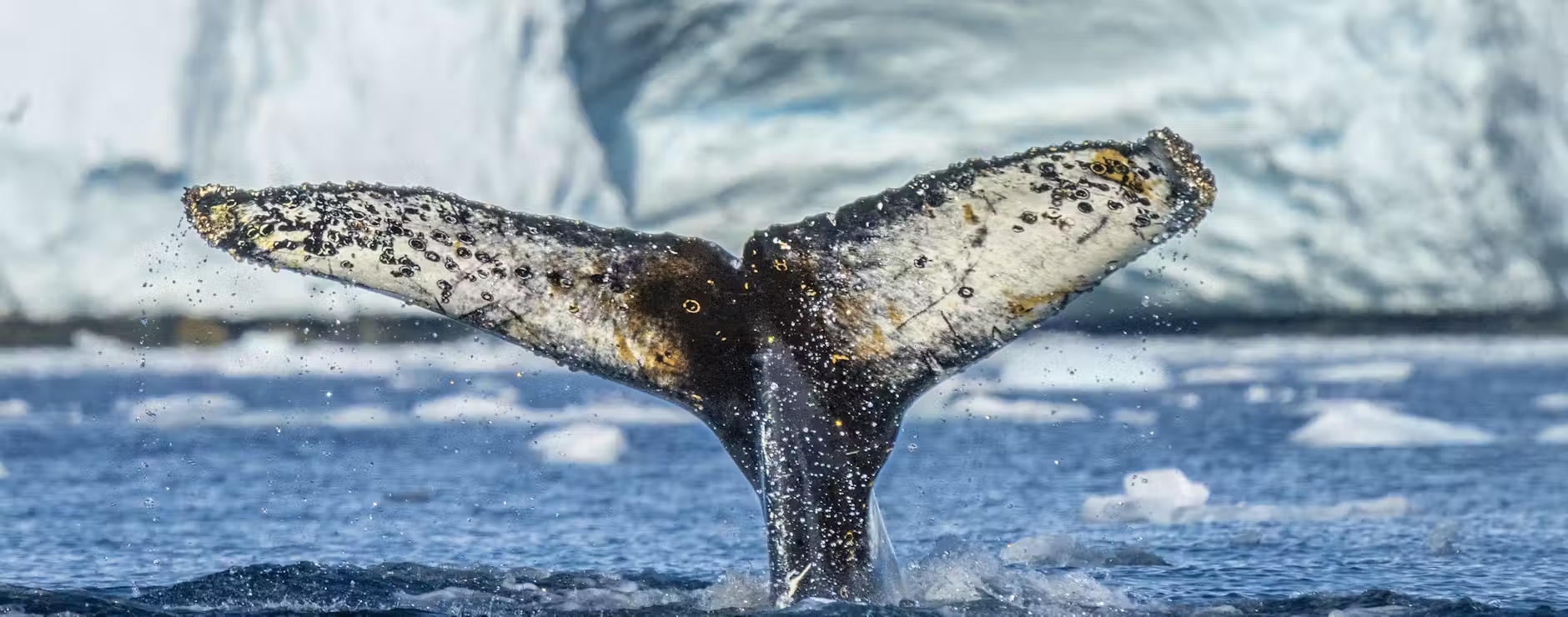
This majestic beast of the seas is recognised by its huge pectoral flippers which can reach a third of its total body length, and as long as a zodiac boat. They are normally black but the undersides of flippers and flukes have varying amounts of white and can be used as aids for individual recognition. They measure 11-19 metres and weigh 25.4-35.5 tonnes, males being usually slightly shorter than females.
Their notorious hump, together with its long pectoral flippers, makes them easy to recognise. Being a baleen whale, they have 2 blow holes, which you'll see if one dives close to your boat. They often work co-operatively to hunt, sometimes by 'bubble-net feeding'.
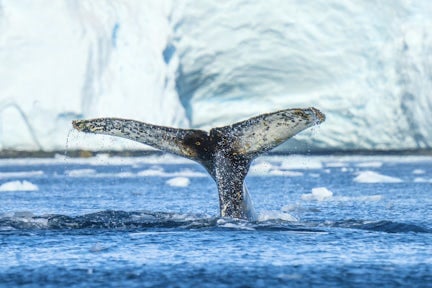
Humpback whale
The Orca, or Killer whale (named because one of the three types of Orca does actually hunt and kill certain types of whale), is the largest member of the dolphin family and can be spotted by its enormous dorsal fin, which can grow to 2 metres high in males.
Orcas have a striking black and white pattern, from throat to abdomen, some of their flanks and an oval blaze behind the eye white, with the rest mainly black. They measure from 3 to 9 metres and weigh three to ten tonnes, males are larger than females. Orcas are found throughout the Southern Ocean, with an estimated population of 80,000.

Orcas (killer whales)
We saw some whale blows in the distance, approached slowly in our zodiac and turned off the engine. We drifted slowly and silently, just waiting for the next "pppppffffff," of breath which could happen anywhere. There was more suspense in that moment than in any movie I've seen!
Julie Ruston Antarctica Specialist
The second smallest of the baleen whales and the most abundant in the Southern Ocean, Minkes have a maximum length of 10.7 metres and weigh up to 9 tonnes. They are usually spotted around the edges of the pack ice during Antarctic summer, with pairing and calving taking place during the winter.
Minkes largely escaped hunting in the first half of the 20th century due to their relatively small size but are now targeted in their hundreds each year by Japanese whalers.

Minke whale
Although lots of other species frequent these waters, they're a lot rarer to spot. The golden ticket sightings include Sperm whales, which have some of the deepest and longest dives of any whale, only returning to the surface every few hours. They've been recorded to dive to 2,000 metres in search of giant squid and large fish. Southern Right whales are also sometimes spotted.
Others to look out for are Blue, Fin and Sei whales, the three largest whales. Blue whale numbers, in particular, are picking up recently after a long period of being endangered, and seeing one is a real cause for celebration.

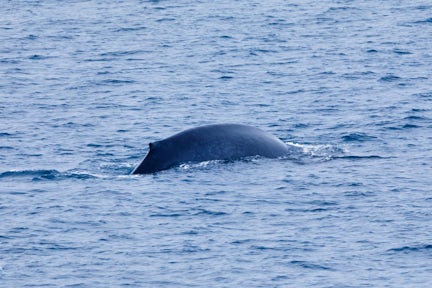
Blue whale
Our ships adhere to IAATO guidelines on watching whales respectfully, by keeping a safe distance and letting them carry on with their activities. However, if the whales are curious and approach, they can get amazingly close.
Seeing a pod of orcas in the Gerlache Strait was a truly unforgettable experience. We were having dinner and I leapt up from the table thinking I’d be back in a few minutes, but an hour later I was still out on the deck, buzzing with awe as they swam close to the ship.
Maddison Clare Antarctica Specialist
February and March are the best months to see whales in Antarctica. Whale numbers are at their peak, and more importantly for visitors to the area, this is when they are at their most curious.
The behaviour change in these months comes from their seasonal feeding pattern. After a long fasting period in warmer waters, whales spend the summer months gorging on food, and by February and March they are satiated, full of energy and ready to play. They begin to be far more interested in interacting with their human visitors, having fun, and putting on a bit of a show.

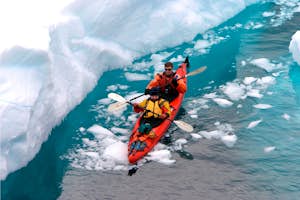
The highlight was kayaking alongside a humpback whale in stunning scenery. Read the full review
Travelled: December 2018
Gill & Richard Starling - United Kingdom
My wife and I were amazed at the amount of wildlife we got to experience (Adelie, Gentoo, and Chinstrap penguins; Leopard, Crabeater, Weddell and Elephant seals; Humpback whales and a pod of over 20 Orcas that swam right by the ship). Read the full review
Travelled: December 2018
Terrie Mandina - United States Of America
We loved the antics of the penguins and the curiosity of the chicks. Up close viewing of seals and whales was awe inspiring. Our outstanding leaders helped to deepen our understanding and appreciation of this amazing world.
Travelled: February 2018
Sue - Australia
We were privileged to see a large pod of humpback whales in a feeding frenzy one evening; the captain stopped the ship for an hour or so and the whales were feeding all around us.
Travelled: February 2017
Steve and Tina - UK
The whales took our breath away. We all froze when one went under our Zodiac.
Travelled: January 2017
Nancy - Texas
Diving: Although having whales close to the surface is the best time to see them, catching them diving is the best opportunity for that perfect whale tail picture.
Breaching: Ejecting themselves out of the water, and sometimes twisting before smashing back down. Theories are it's done simply for fun, or a way to scratch their itchy bodies due to parasites.
Spyhopping: Lifting their heads out of the water to have a better view of what's around. Having a humpback spyhopping next to your zodiac boat is a guaranteed wow moment!
Lobtailing: Slapping their flukes against the water to create noise. Thought to be a form of communication.

As an Antarctic traveller, you're in a unique position to help with scientific research on whales. The ground covered by tourist ships is far more extensive than individual research ships can cover, so visitors have many more opportunities for whale sightings. Many voyages run Citizen Science programs, where travellers can help collect data during their trip, and share that data with research teams.
One of the main projects is Happy Whale. Get involved by uploading your whale fluke pictures to help researchers identify different individual whales and track their migration.

Price Match Promise - We’ll match any price you find elsewhere for the same trip
Choosing when to go to Antarctica is a key part of planning a cruise, with each month of the season offering a different side of the continent.
Discover More
From stepping foot on polar shores to zodiac cruises, and wildlife encounters to adventure activities, here’s what you can expect from an Antarctic cruise.
Discover More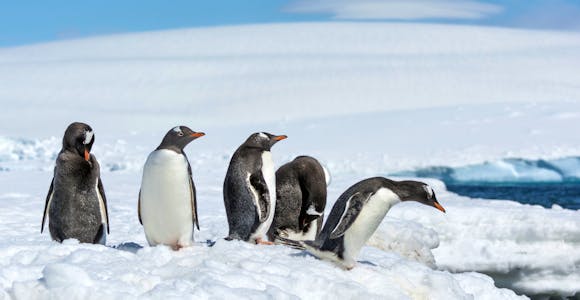
Antarctica abounds in penguins, seals and whales, making it one of the most rewarding wildlife watching places on earth.
Discover More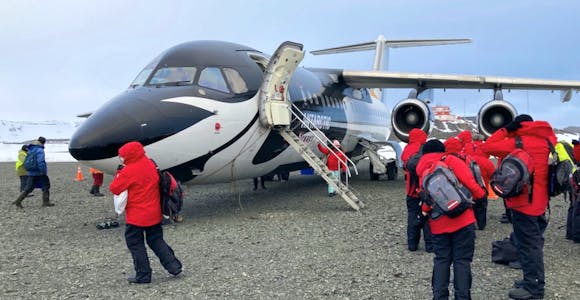
Fly & Cruise trips offer the best of Antarctica in one simple package: flying to the Antarctic Peninsula from Chile in two hours to join an expedition cruise ship for a classic…
Discover MoreWe'll spend some time listening to your aspirations, then discuss the kind of experience that might suit you.
Next we'll discuss the options, shortlist the best trips for you and present you our impartial recommendations.
We'll place a 24 hour hold on your preferred option - without obligation - whilst we talk through the details.